
FREE QUICK GUIDE AND CHECKLIST
Community Meetings: Quick Guide & Checklist
A simple 10 to 15 minute check-in that helps people arrive, be heard, and get ready to work together.
Many meetings start with a full agenda while people are still carrying whatever they walked in with. This free guide gives you a short, structured way to begin: three questions, one go-around, and a predictable rhythm your team can return to.
Free 2-page PDF for leaders, facilitators, and teams in organizations that serve people.
When people arrive overwhelmed, the agenda stalls.
You have probably started a meeting that looked organized on paper but felt scattered in the room. People were distracted, guarded, or still reacting to the last crisis. Decisions took longer, and small misunderstandings grew.
Stress does not stay outside the door. When no one has a chance to name how they are arriving, it tends to show up later as confusion, conflict, or quiet disengagement.
A community meeting gives the group a few minutes to arrive before the work begins. It will not fix every challenge. It changes how your time together starts.
Small, consistent practices are where culture change becomes real.
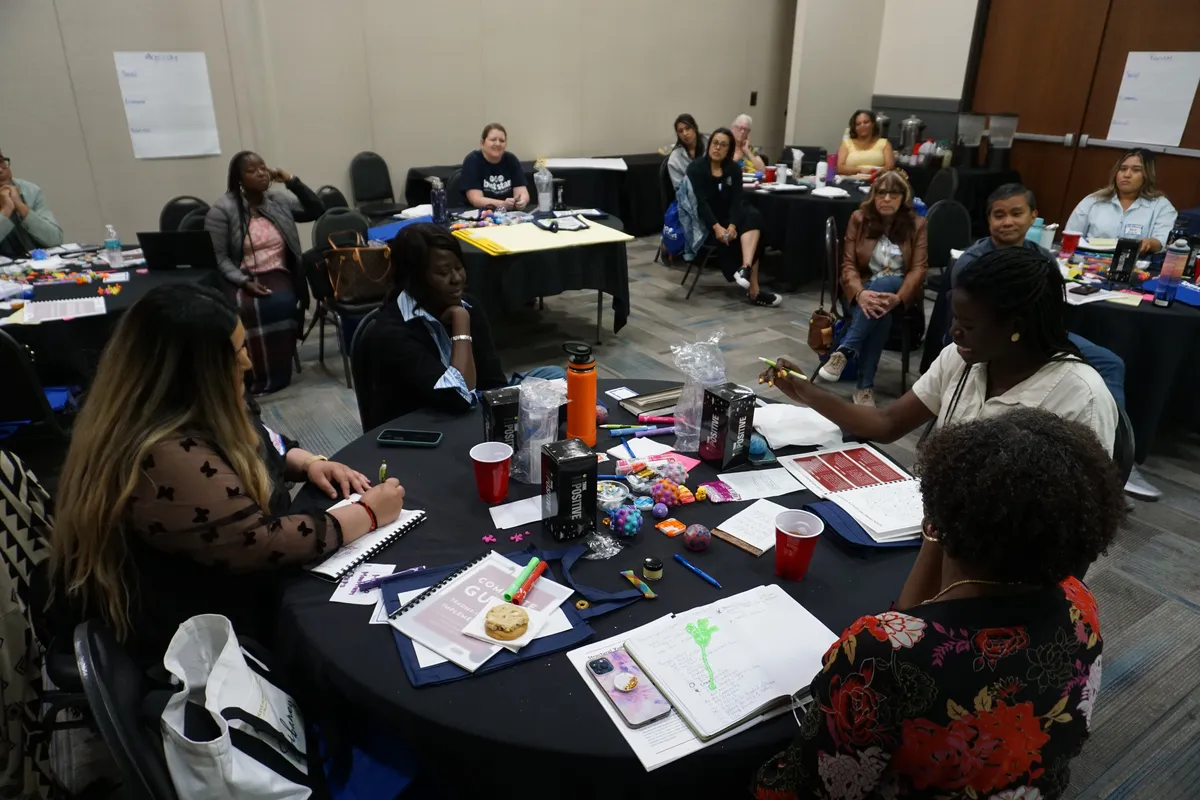
A small practice that puts trauma-informed values into the workday
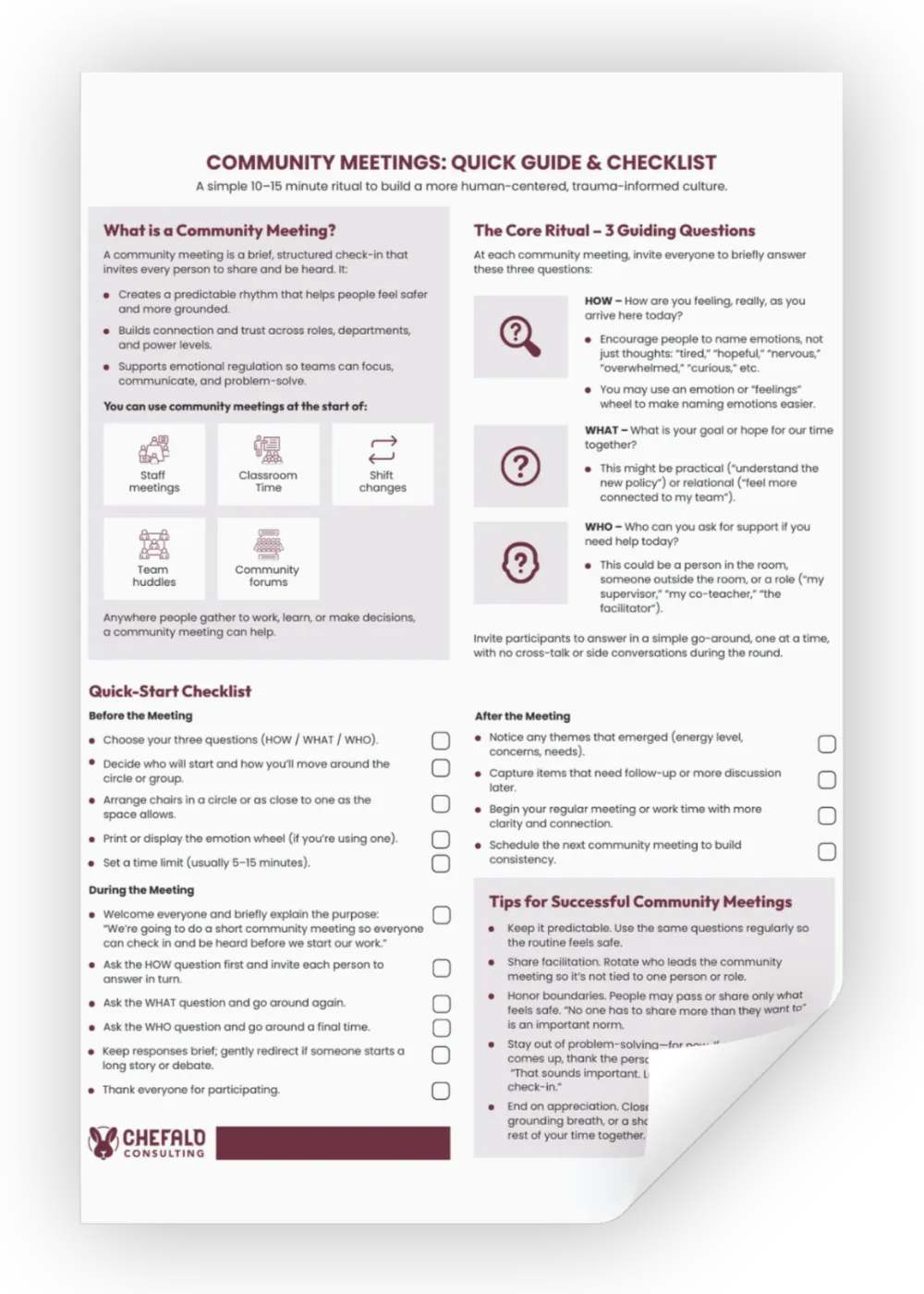
Community Meetings: Quick Guide & Checklist is a free resource that walks you through a brief, structured check-in built around three guiding questions. Every person is invited to share and be heard, one at a time.
Values become culture when people have a regular way to practice them, not only when they appear in a policy or a training. A community meeting gives your team that recurring place to practice safety, connection, and shared responsibility.
Want the bigger picture of implementation? Explore the free Implementation Overview.
Designed for anyone who brings people together
This guide is for supervisors, team leads, educators, facilitators, and internal champions who want a practical, repeatable way to open meetings, shifts, classes, and gatherings.
It is especially useful in schools, justice and public safety, local government, nonprofits, community organizations, and virtual or hybrid teams.
No special training is required. You do need a willingne`ss to try the practice consistently and let it become part of how your team works.
Inside the guide
The guide fits everything you need to begin on two pages. It includes:
The three guiding questions (HOW, WHAT, and WHO) that structure each check-in
A quick-start checklist for before, during, and after each meeting
The trauma-informed reasons each question works
Ways to adapt the practice for schools, justice and public safety, local government, nonprofits, and virtual teams
Tips for facilitation, boundaries, and keeping the routine predictable
What a regular check-in makes possible
One community meeting will not change your culture. Practiced consistently, it can help your team build three things.
A predictable start
A routine people can count on, which helps them feel safer and more settled before the work begins.
Shared awareness
A clearer sense of how the group is arriving, so mismatched expectations surface early instead of later.
Visible support
A regular reminder of who people can turn to, and a signal to leaders when support is missing.
Start small. Then make it a habit.
Choose one recurring meeting where the practice fits, such as a weekly staff meeting or a team huddle. Read the guide, decide who will facilitate, and set a short time limit.
Try it for a few weeks before deciding whether it works. The value comes from repetition: the same questions, asked the same way, until the routine feels safe and familiar.
As your team gets comfortable, rotate who facilitates so the practice belongs to the group rather than to one person.
Get the free Community Meetings: Quick Guide & Checklist
Complete the form and we will send it directly to your email, so you can begin using it right away.
We respect your privacy. You may unsubscribe at any time.

By submitting this form, you agree to receive the requested resource. If you check the box above, you also agree to receive implementation insights, resources, and occasional updates from Chefalo Consulting. You may unsubscribe at any time.
Use and sharing
You are welcome to use this guide within your organization and share it with colleagues and teams in its original form. Please retain the Chefalo Consulting name and copyright information.
The guide may not be altered, rebranded, sold, incorporated into a commercial product, or represented as authorization to deliver Chefalo Consulting training or certification.
READY TO MAKE IT A LASTING PRACTICE?
Lead community meetings with more structure and confidence
Community Meetings: Quick Guide & Checklist helps you start. The Community Meeting Facilitation Toolkit helps you sustain the practice across settings and facilitators.
The toolkit includes sample agendas for different timeframes and settings, word-for-word scripts for openings and closings, guidance for handling conflict and emotional escalation, and tools for tracking impact over time.
It is designed for facilitators and leaders who want community meetings to become a consistent part of how their team works.
Want help building this practice across your organization? Request a conversation.