
FREE MINDFULNESS GUIDE
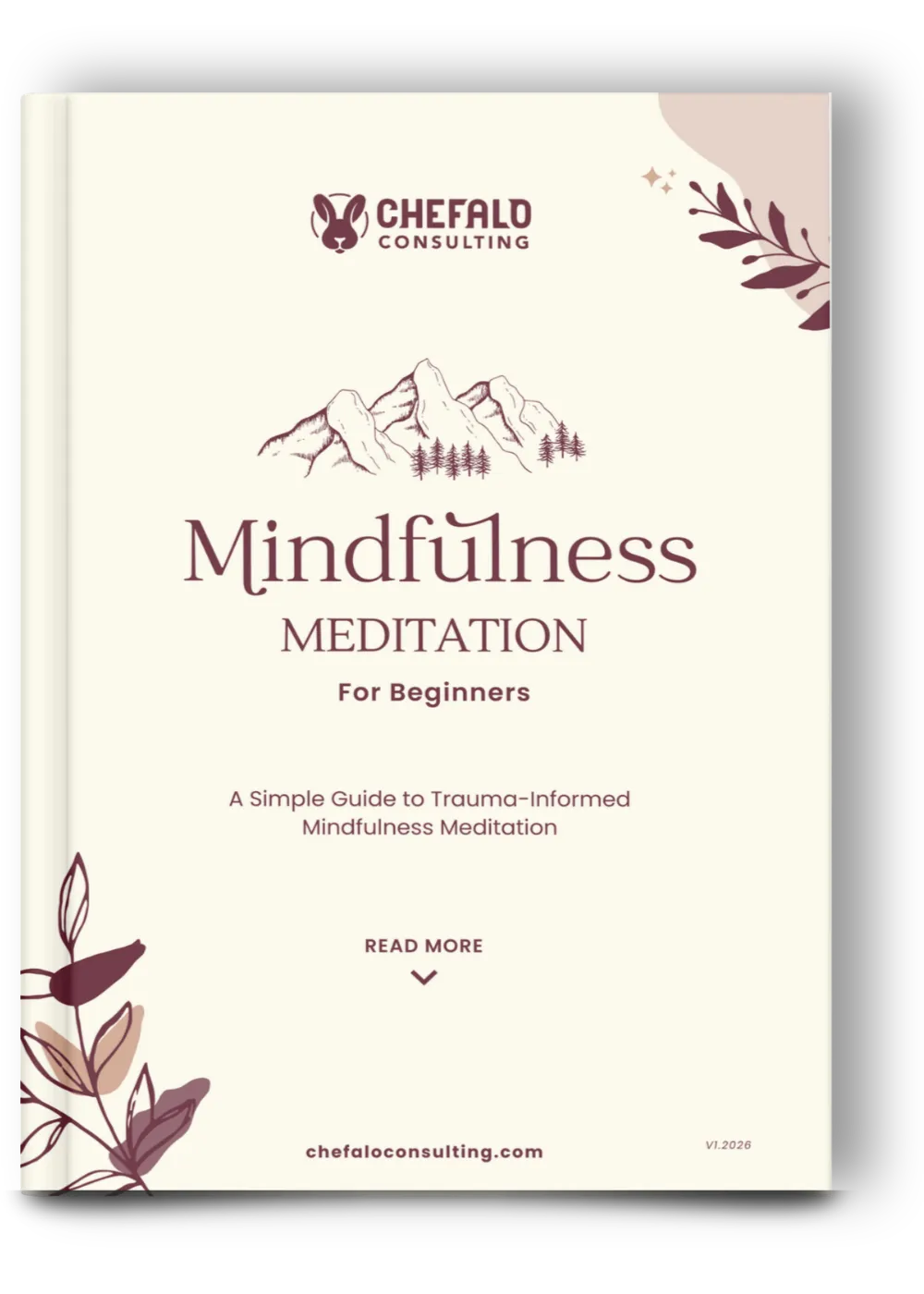
Mindfulness Meditation for Beginners
A simple, trauma-informed guide to mindfulness meditation that lets you choose what feels safe enough for you today.
Mindfulness is often taught as if everyone can sit still, close their eyes, and feel calm on cue. This free guide offers a gentler starting point: short practices you can adapt, with permission to keep your eyes open, move, pause, or stop.
Free downloadable PDF for anyone building a steadier daily practice, including people who support others at work.
If mindfulness has felt like one more thing to get right, start here.
Many people try meditation during a stressful season and walk away feeling worse. Sitting still can feel uncomfortable. Closed eyes can feel unsafe. A busy mind can feel like proof that you are doing it wrong.
That experience is common, and it is not a personal failure. Practices that ignore safety and choice are not built for everyone.
This guide treats mindfulness as practice, not performance. You choose the posture, the setting, and the length. A few minutes on most days can do more than one long session once a week.
There is no finish line here. Each time you return, you are practicing.
A gentle starting point, not a quick fix
Mindfulness Meditation for Beginners is a free digital guide that introduces trauma-informed mindfulness through short readings, simple practices, and space to reflect.
It is designed to help you build a practice that fits your body, your schedule, and your sense of safety. It supports personal steadiness. It is not a substitute for professional mental health care, and it does not ask you to carry stress that belongs to your workplace on your own.
Short on time? Try the free Trauma-Informed Mindfulness Micro-Practice.
Designed for people who support others and need support too
This guide is for anyone new to mindfulness, or returning to it, who wants a practice that respects safety, choice, and pacing.
It is especially useful for staff, supervisors, and leaders in schools, healthcare, human services, courts, nonprofits, and other organizations that serve people, where stress and secondary exposure are part of the work.
You do not need experience, special equipment, or a quiet hour. You need a few minutes and a willingness to notice what is here.
Inside the guide
The guide brings beginner practices and reflection into one resource. It includes:
The eight attitudes of trauma-informed mindfulness
Meditation posture options, including ways to adjust for comfort and safety
Five short practices: breathing, sensations, hearing, thinking, and choiceless awareness
Three guided meditations: Grounding, 5-4-3-2-1, and Gentle Reminder
Journaling pages for reflection, goals, obstacles, and keeping your practice going
Three things to build in your first week
The guide will not remove the stress in your life or your work. It can help you build a few steady habits with more awareness and less pressure.
Notice what is here
Bring attention to your breath, body, sounds, and thoughts without labeling them good or bad.
Choose what feels safe
Adjust your posture, setting, and focus so the practice supports you rather than overwhelms you.
Keep coming back
Plan for the things that tend to interrupt practice, so a missed day does not become a reason to stop.
Start small. Then return to it.
Read the introduction first, then choose one practice that feels manageable today. A few minutes is enough. If any practice feels uncomfortable, you can open your eyes, shift your attention, move, or stop.
Use the journaling pages after you practice to notice what came up and what helped. Over time, they become a record of what supports you.
Return to the guide on harder days as well as easier ones. Consistency matters more than length, and starting again always counts.
Get the free Mindfulness Meditation for Beginners guide
Complete the form and we will send it directly to your email, so you can begin using it right away.
We respect your privacy. You may unsubscribe at any time.

By submitting this form, you agree to receive the requested resource. If you check the box above, you also agree to receive implementation insights, resources, and occasional updates from Chefalo Consulting. You may unsubscribe at any time.
Use and sharing
You are welcome to use this guide for your own practice and share it with colleagues, teams, and people you support in its original form. Please retain the Chefalo Consulting name and copyright information.
The guide may not be altered, rebranded, sold, incorporated into a commercial product, or represented as authorization to deliver Chefalo Consulting training.
This guide offers general mindfulness information and is not a replacement for professional mental health care or emergency services. If you are in crisis, call or text 988 in the US, or contact your local emergency number.
READY TO GO FURTHER?
When stress comes from the work itself
Mindfulness Meditation for Beginners helps you build a steadier personal practice. The Burnout Prevention Playbook helps you look at the work itself.
It is a practical next step for examining the workload, boundaries, and support that shape how you feel at work, and what you can begin to change. The Burnout Prevention Playbook is $29.
Want to bring this work to your team? Request a conversation.